Key Takeaways at 15 Weeks Pregnant
- Baby’s development is accelerating, with bones hardening and facial features becoming more defined.
- Your energy levels might improve, but new symptoms like nasal congestion and leg cramps could appear.
- It’s a good time to plan for a mid-pregnancy ultrasound and start preparing for maternity clothes.
Pregnancy Symptoms During Week 15 and How to Manage
At 15 weeks of pregnancy, several symptoms may intensify or present themselves, requiring specific strategies to manage:
- Nasal Congestion: Due to increased blood flow and hormonal changes, swelling in nasal passages can occur. Using a saline spray, humidifier, or staying hydrated can help ease this discomfort.
- Leg Cramps: These are common and may happen mostly at night. To relieve cramps, practice gentle stretching exercises, stay hydrated, and consider light walks to improve blood flow.
- Increased Appetite: By this week, you might find yourself hungrier than usual. Focus on nutrient-rich foods like lean proteins, whole grains, fresh fruits, and vegetables to nourish both you and your baby. Maintaining balanced meals can also help manage weight gain during pregnancy.
- Heartburn and Indigestion: As your growing uterus puts pressure on your digestive organs, you may experience heartburn or indigestion. Eating smaller, more frequent meals and avoiding spicy or fatty foods can help minimize these symptoms. Sitting up after meals and sleeping with your head slightly elevated can also reduce discomfort.
- Fatigue and Sleep Issues: The demands of pregnancy can lead to increased tiredness. Prioritize rest by creating a calming bedtime routine, napping when needed, and staying physically active during the day to improve overall sleep quality.
- Visible Veins: Increased blood volume can make veins more prominent. While this symptom is typically harmless, staying active and elevating your legs can help improve circulation.
To manage these symptoms effectively, focus on self-care, maintain a balanced diet, practice regular exercise, and stay hydrated. Consulting your healthcare provider for personalized advice can also offer support in navigating these changes smoothly.
15 Weeks Pregnant is How Many Months?
At 15 weeks, you are in your fourth month of pregnancy. The second trimester typically lasts from week 13 to week 26. This period is often considered the most comfortable stage of pregnancy as many early symptoms like nausea tend to decrease.
How Big Is My Baby at 15 Weeks?
Your baby is now about the size of an apple, measuring approximately 6.57 inches long from head to toe and weighing around 4.13 ounces. As your baby grows, their proportions start to even out, with the legs now growing longer than the arms.
Baby Development at 15 Weeks
At 15 weeks of pregnancy, your baby is undergoing significant growth and development:
- Skeletal Development: The bones are beginning to harden from the cartilage, and tiny facial features like the nose and lips are becoming more defined.
- Muscle Movements: The baby’s muscles are developing, allowing more movements, like stretching, kicking, and making facial expressions, although you might not feel them yet.
- Skin and Hair: Lanugo, a fine layer of hair, is covering your baby’s body to help regulate temperature. The skin is still translucent, but hair follicles are beginning to form.
- Sensory Development: The baby’s ears are positioned on the sides of the head, and they can start to sense light even though their eyes are closed.
- Heartbeat: The baby’s heart is now beating at about 140-170 beats per minute, pumping blood throughout the body as it strengthens.
- Sense of taste: Your baby is forming taste buds, and nerves begin connecting them to the brain. By about 20 weeks, your baby’s taste buds will be fully formed.
These developments are crucial as your baby prepares for more complex growth in the coming weeks. Regular prenatal care is essential to track this progress and ensure both your and your baby’s health.
Your Pregnant Belly at 15 Weeks
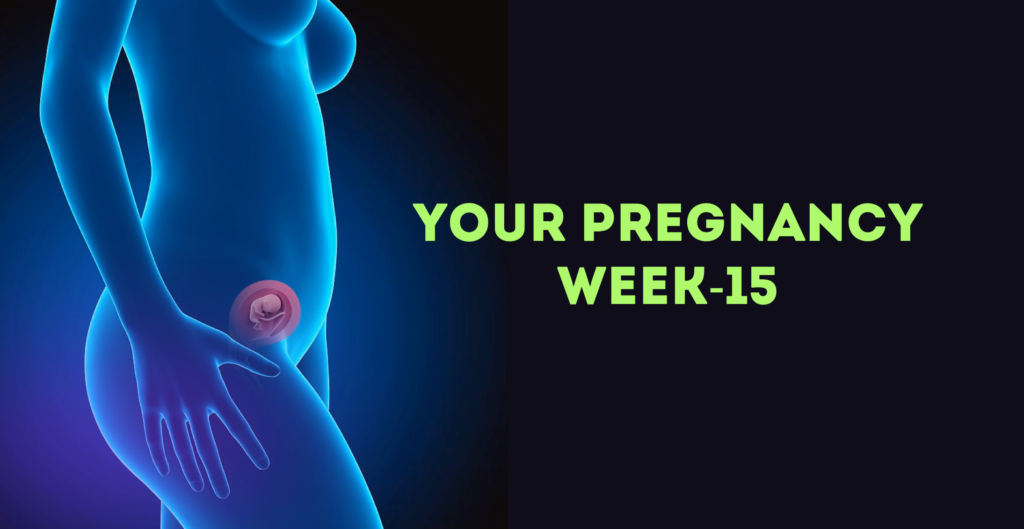
At 15 weeks pregnant, your belly is starting to show more prominently as your uterus continues to grow and rise above your pelvic area. The increased size may cause your abdomen to appear rounder, making your pregnancy more noticeable. You might also feel slight stretching or cramping as your ligaments adjust to accommodate your growing uterus. Some women start to feel more comfortable with their expanding belly as they transition into the second trimester, where the risk of nausea often decreases.
Pregnancy Checklist at 15 Weeks Pregnant
- Schedule a Prenatal Visit: Ensure you keep regular appointments to monitor your baby’s growth.
- Stay Active: Light exercises, like walking or prenatal yoga, can help boost your energy and relieve stress.
- Focus on Nutrition: Incorporate iron-rich foods into your diet to support increased blood flow.
To-Do’s for DAD
- Connect with Your Partner: Offer support as she navigates physical and emotional changes.
- Prepare for Baby’s Arrival: Start discussions about baby names, parenting styles, and any necessary baby gear.
- Attend Appointments: Accompany your partner to prenatal visits when possible to stay informed and involved.
Frequently Asked Questions
Q: Is it normal to have leg cramps at 15 weeks pregnant?
A: Yes, leg cramps are common due to increased pressure on the veins and changes in circulation. Staying active and hydrated can help reduce the discomfort.
Q: What should I avoid during the 15th week of pregnancy?
A: Avoid high-stress activities, heavy lifting, and any foods that may increase the risk of foodborne illnesses, like unpasteurized cheeses or undercooked meats.
Q: When will I start feeling my baby move?
A: Many women begin to feel baby movements between 16 and 22 weeks. These early movements may feel like fluttering or light tapping.